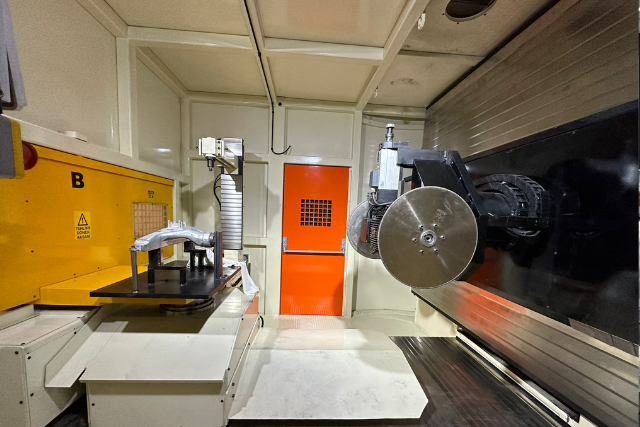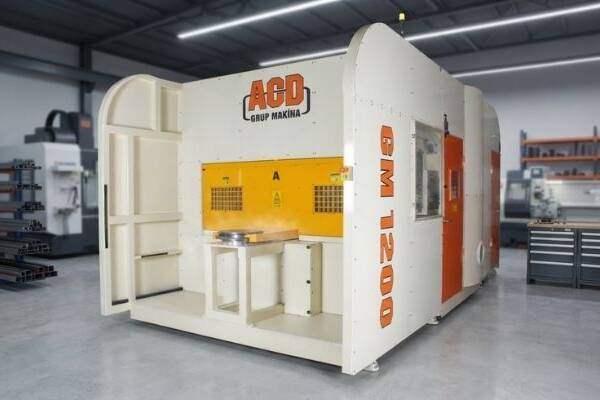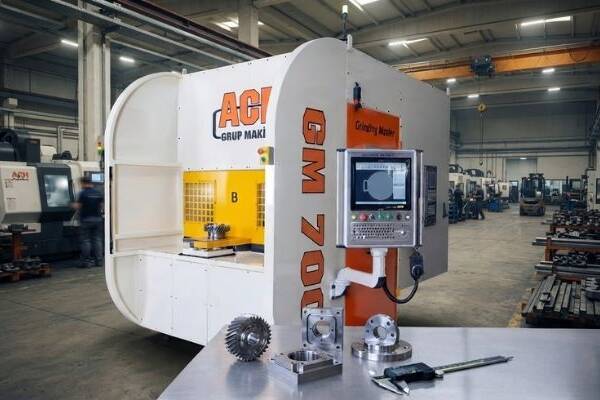
Ensuring that raw metal parts mass-produced in industrial metalworking sectors and foundries meet industrial standards and achieve a flawless structure is a vital requirement for production quality. To this end, the most fundamental piece of industrial equipment used in modern production facilities—which smooths metal surfaces and removes defects—is known as a foundry grinding machine. These powerful machines, which give raw castings their final geometric shape during the production process, offer high efficiency on factory processing lines. By preserving the workpiece’s structural form and significantly contributing to achieving the most precise dimensional tolerances, these systems directly determine the success of all post-casting operations. Companies operating in the metallurgy and machine manufacturing sectors are able to both save on labor costs and elevate product quality to international standards thanks to these advanced machines.
How Does a Casting Grinding Machine Work?
A casting grinding machine is a complex yet highly effective mechanical system that continuously transfers rotational force—derived from high-speed, powerful electric motors—to the workpieces. The machine’s motor continuously rotates specially manufactured diamond- or silicon carbide-based abrasive wheels and sanding belts at very high peripheral speeds. An experienced operator or robotic arms guide the raw cast metal part toward this rotating abrasive surface with an extremely controlled and balanced pressure force. Thanks to the intense friction and material removal mechanism that results, all unwanted excess material, burrs, and irregularities on the part’s surface are rapidly removed in the form of swarf particles. Special cooling fluids or emulsions are continuously circulated through the system to balance the excessive heat generated during the process and extend the life of the cutting edges.
Why Do Castings Require Grinding?
The casting production process is a time-honored method that begins with pouring metals melted at high temperatures into specially prepared sand, metal, or ceramic molds. Once the metal has completely cooled and solidified within the mold, unwanted flash, gate residues, and surface imperfections inevitably remain on the resulting raw castings. The machining stage for castings is an absolutely essential step in industrial production to eliminate these inevitable surface defects and residues. Specially developed deburring machines or high-capacity grinding systems come into play at this stage to correct the geometry of the metal surface. Rough, burr-laden, and defective surfaces can negatively impact subsequent CNC machining or assembly stages, leading to significant production losses.
Where Are Casting Grinding Machines Used?
The growing and diversifying modern industrial sectors make intensive use of these powerful machines in various production areas and under heavy-duty conditions. The automotive industry makes extensive use of these professional systems in the machining of critical components such as engine blocks, cylinder heads, and transmission housings. Across the metal industry, this equipment plays an indispensable role in the serial machining and preparation of iron, steel, and aluminum castings. Heavy-industry machine-manufacturing plants use these machines to smooth out large-volume castings and mechanical fasteners. Industrial-grade grinding machine models used throughout the factory play an active role at every stage of production, supporting the flawless completion of engineering projects.
What Are the Different Types of Casting Grinding Machines?
There are numerous advanced and modern casting grinding machine models on the market, suitable for various production capacities and technical requirements. Surface grinding machines professionally ensure the high-precision, error-free machining of flat and wide metal surfaces. Belt grinding systems, on the other hand, clean hard-to-reach areas of metal parts with complex geometries thanks to their flexible structures and abrasive grinding belts. Industrial grinding systems are specifically designed for foundries and factories engaged in high-volume mass production and are manufactured as engineering marvels. Various metal grinding machine options provide businesses with flexibility by successfully meeting the specific requirements of different production lines.
What Are the Advantages of a Casting Grinding Machine?
Actively using these powerful machines on factory production lines provides businesses with significant commercial and technical advantages in their operational processes. Thanks to their high operating speed and uninterrupted operation capacity, production cycle times within the factory are significantly reduced. Achieving flawless surface quality directly boosts the commercial value of the final metal products in both domestic and international markets. These automation-focused systems, which significantly reduce the costs of intensive manual labor, completely eliminate human-induced errors. Thanks to the high efficiency and energy-saving benefits they provide, the capital investment in the machine pays for itself in a very short time.
What Should Be Considered When Selecting a Casting Grinding Machine?
Making the right investment in a casting grinding machine requires examining certain critical technical details for the long-term efficiency of production facilities. The type, hardness, and casting structure of the material to be processed directly determine the motor power and torque capacity of the machine to be selected. Facilities with high expectations for precision grinding should select models equipped with advanced control units and micron-level adjustment capabilities. Machines manufactured from high-quality body components that minimize vibration offer businesses the advantage of long-term durability. The machine’s motor power, grinding wheel diameter, and rotational capacity must be fully compatible with the factory’s daily production volume and workpiece dimensions.
Why Is Safe Use of a Casting Grinding Machine Important?
When working with industrial metalworking machines, occupational health and safety regulations must always be the top priority. Abrasive wheels spinning at extremely high speeds during the grinding process emit intense sparks and sharp metal particles into the surrounding area. Operators are required to wear all necessary safety equipment, such as approved safety goggles, work clothing, face shields, and heavy-duty gloves. Operating the machine with the safety guards fully closed completely prevents workplace accidents such as potential grinding wheel explosions or flying debris. Regular safety inspections and testing of emergency stop buttons ensure the physical safety of workers under all conditions.
How Is a Casting Grinding Machine Maintained?
Periodic maintenance procedures are of great importance for industrial equipment to operate smoothly and at high performance for many years. Metal dust, burrs, and swarf residue accumulated on the machine after the daily production shift must be carefully and thoroughly cleaned. Moving mechanical parts and slides must be lubricated periodically and at regular intervals using industrial oils of appropriate viscosity. Worn, cracked, or reduced-diameter grinding wheels must be replaced with new ones in a timely manner to prevent potential performance losses in machining quality. Through planned preventive maintenance, unexpected factory breakdowns are prevented, and the production line continues to operate without interruption.
Frequently Asked Questions (FAQ)
After which processes are castings ground?
Castings are ground immediately after the molten metal has cooled and solidified in the mold. This process improves surface quality.
Does the grinding process improve the surface quality of castings?
Yes, this process significantly improves quality by removing all surface imperfections, burrs, and residues. This prepares the parts for subsequent assembly.
In which industries are casting grinding machines preferred?
It is widely used in the automotive, heavy industry, machinery manufacturing, and general metal casting processing sectors. Factories use these systems for production.
Does the casting grinding process affect production time?
Powerful machines shorten operation times and reduce reliance on manual labor, thereby accelerating the overall production process.
The Casting Grinding Machine Is a Critical Piece of Equipment That Enhances Production Quality
The use of casting grinding machines is absolutely critical for achieving flawless results in industrial metal processing and meeting market standards. These powerful systems, which directly improve production quality, surface smoothness, and operational efficiency, are indispensable assets in modern factories. The right machine selection, appropriate technical parameters, and regular maintenance procedures form the foundation of long-term industrial success.
Metalworking companies that plan their investments around this technological infrastructure will always stay one step ahead in the competitive global market. To establish a safe, standards-compliant, and highly efficient production line, these advanced machines must be meticulously integrated into operations.
For more information and professional support, please contact ACD GROUP.